




 Arun Kumar
 Last Updated on July 6, 2026 by Arun Kumar
Quick Summary / Key Takeaways
Buying a gaming laptop isn’t just about picking the most powerful machine you can afford. The right choice depends on GPU performance, CPU balance, RAM and storage needs, display quality, cooling efficiency, and after-sales support—especially in hot climates and price-sensitive markets like India. This guide breaks down exactly what to look for so first-time buyers can avoid costly mistakes and choose a gaming laptop that delivers long-term value.
Gaming laptops have evolved rapidly, but choosing the right one has become more confusing than ever. With dozens of configurations, aggressive marketing, and wide price gaps, many buyers struggle to understand what should I consider when buying a gaming laptop and which specs actually matter in real-world use.
If you’re a student, casual gamer, or working professional researching your first gaming laptop, this guide is designed for you. Instead of brand hype, we’ll focus on performance, durability, thermals, and support, helping you make a confident, future-ready decision—whether your goal is smooth gameplay, video editing, or content creation.
Core Performance Factors That Matter Most
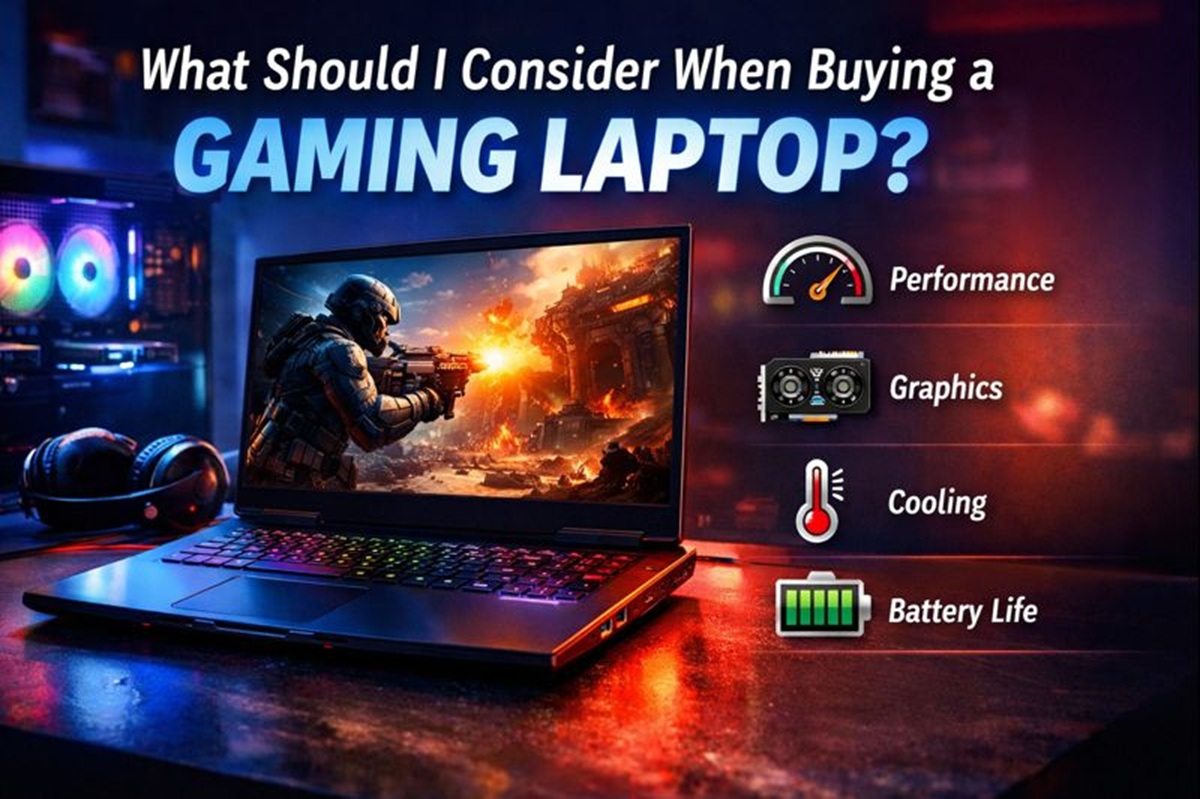
When evaluating gaming laptop performance factors, the GPU and CPU combination should always be your starting point.
GPU vs CPU for Gaming Laptop Performance
For gaming and creative workloads, the GPU plays the biggest role. NVIDIA RTX 40-series and upcoming 50-series GPUs—such as the RTX 4060 or higher—offer a major leap in efficiency and sustained performance. A higher Total Graphics Power (TGP) matters more than just the GPU name, as it directly affects frame rates during long gaming or editing sessions.
The CPU supports multitasking, streaming, and exports. Intel Core i7/i9 or AMD Ryzen 7/9 processors provide the right balance for modern games and demanding workflows. Pairing a powerful GPU with a weak CPU creates a bottleneck, so balance is key.
🎮 Planning to Buy a Gaming Laptop?
Learn how to choose the right GPU, RAM, cooling system, and performance specs before buying.
Read This Guide Before Buying →Gaming Laptop RAM and Storage Requirements Explained
RAM and storage significantly affect everyday usability, yet they’re often misunderstood by first-time buyers.
A minimum of 16GB DDR5 RAM is essential today for smooth gameplay and multitasking. If your usage includes video editing, heavy exports, or future-proofing, 32GB RAM is ideal—especially if the laptop supports easy upgrades.
Storage should start at 512GB NVMe SSD, which ensures fast boot times, quick game loading, and smooth file transfers. Games, updates, and media files add up quickly, so upgradability matters more than raw capacity on day one.
Display Features for Gaming Laptops You Shouldn’t Ignore
A powerful GPU means little if your display can’t keep up.
High refresh rate panels—144Hz or higher—are essential for responsive gaming. Full HD works well for competitive gaming, while QHD provides sharper visuals for immersive titles. OLED displays offer excellent contrast and color accuracy, making them ideal for both gaming and content creation, provided the performance can support them.
Low ghosting and smooth motion handling directly impact gameplay experience, making the display a critical part of the buying decision.
Build Quality and Thermal Performance
Gaming laptops generate heat, and poor cooling can silently destroy performance.
Efficient thermal designs—such as vapor chamber cooling found in premium gaming models—help prevent thermal throttling during extended sessions. This is especially important in warmer regions, where ambient temperatures already push hardware to its limits.
Durable chassis designs also matter for portability. Military-grade builds, like those seen in performance-focused series, offer better longevity for users who travel or work on the go. Expect limited battery life under heavy load—typically 1 to 2 hours—so gaming laptops are best used plugged in.
Buying Considerations
Beyond specs, local factors can heavily influence long-term satisfaction.
After-sales support and service coverage are often overlooked but extremely important. Brands with wide pickup and service networks—even in Tier 2 cities—offer peace of mind. Delays in parts availability or repairs can turn a powerful laptop into a frustrating experience.
Pricing also varies significantly. Entry-level gaming laptops start around ₹60,000, while high-end configurations can exceed ₹2 lakh. Financing options, extended warranties, and on-site service plans can make premium models more accessible without compromising reliability.
Gaming Laptop Buying Guide: Brand-Level Insights
Different brands excel in different areas, and understanding these strengths helps narrow down choices.
Some brands focus on value and upgradeability, offering reliable cooling and competitive pricing. Others prioritize premium displays and portability, while a few stand out for fast repair times and professional support. No single brand is perfect, so align brand strengths with your priorities—whether that’s service reliability, display quality, or long-term performance stability.
How to Choose a Gaming Laptop Without Regret
The best way to avoid buyer’s remorse is to think beyond launch-day performance. Consider how the laptop will handle future games, software updates, and heavier workloads over the next three to four years.
Upgradability, thermal headroom, and service support matter just as much as raw specs. A slightly lower GPU paired with better cooling and support often delivers a better long-term experience than a top-tier GPU in a poorly designed chassis.