


 Arun Kumar
 Summary / Key Takeaways
- Yes, gimbal heads are ideal for heavy telephoto and super-telephoto lenses.
- They balance the lens at its center of gravity for smooth movement.
- Best for wildlife, bird, and sports photography.
- Less practical for travel or lighter lenses like 70–200mm.
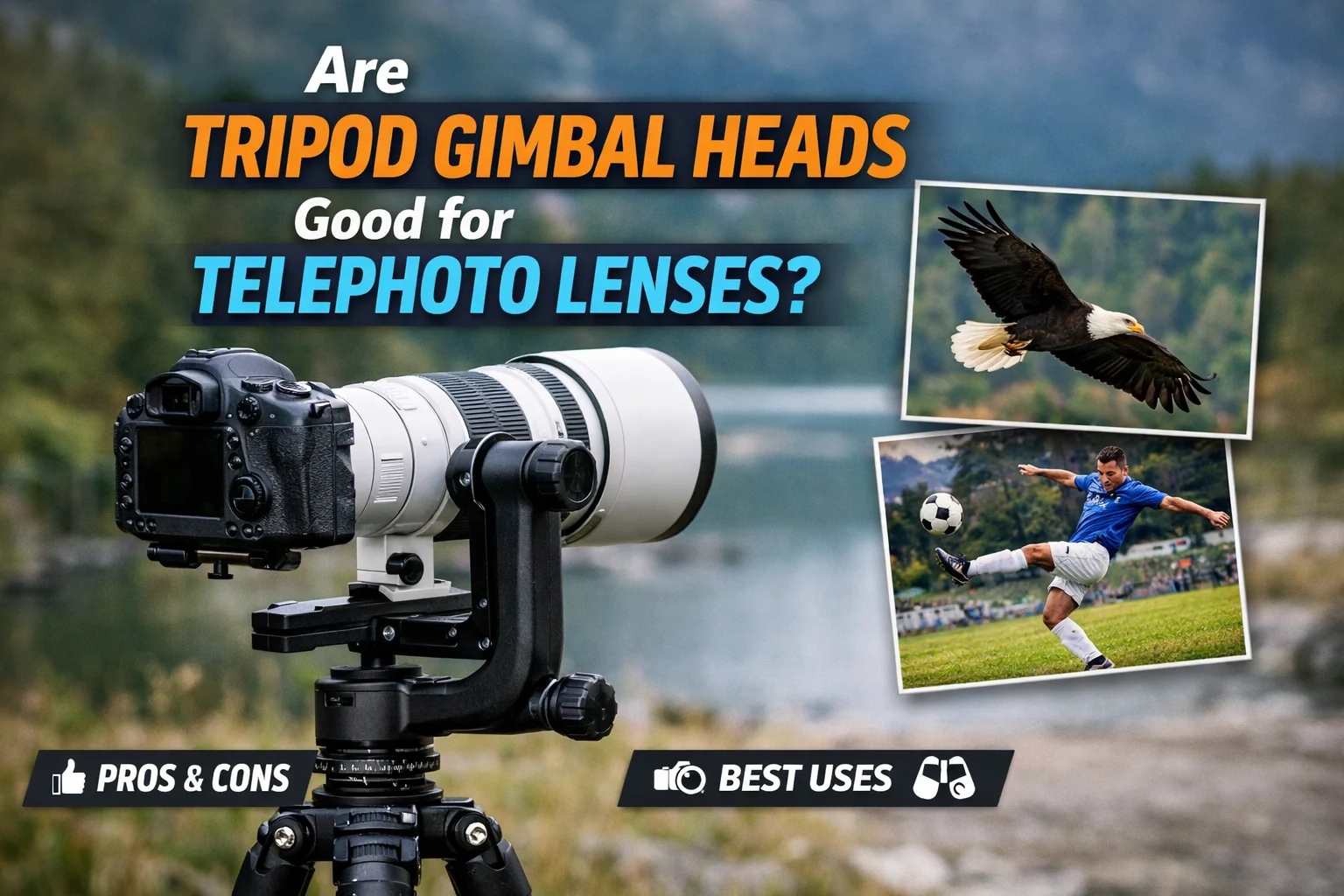
Yes, tripod gimbal heads are excellent for telephoto lenses, especially heavy models like 400mm, 500mm, or 600mm. They balance the lens at its center of gravity, allowing smooth panning and tilting with minimal effort. This improves subject tracking, reduces fatigue, and helps capture sharper images during long shoots.
Why Are Gimbal Heads Better for Long Telephoto Lenses?
Long telephoto lenses are front-heavy and often weigh over 5 kg with the camera body attached. A gimbal head supports this weight evenly.
Key advantages:
- Perfect balance: The lens floats around its center point instead of tipping forward.
- Smooth tracking: Ideal for moving subjects such as birds in flight or athletes.
- Reduced strain: Less wrist and shoulder fatigue during extended sessions.
- Improved stability: Minimizes shake for sharper results.
Compared to a standard ball head, a gimbal allows more controlled and fluid motion, especially at 400mm and beyond.
When Should You Use a Gimbal Head?
1. Wildlife and Bird Photography
Tracking unpredictable movement requires fluid horizontal and vertical motion. A gimbal makes this effortless.
2. Sports Photography
Fast action demands quick repositioning. A balanced setup helps maintain framing accuracy.
3. Super-Telephoto Lenses (500mm+)
Professional models like the Wimberley WH-200 and ProMediaGear GKJr are built to handle large, heavy lenses comfortably.
If you regularly use a 500mm or 600mm lens, a gimbal head is often considered essential.
Are There Any Drawbacks?
Yes, there are a few limitations:
- Bulky design: Larger than ball heads.
- Heavier setup: Adds weight to your tripod kit.
- Overkill for lighter lenses: A sturdy ball head is usually enough for a 70–200mm lens.
For travel or compact setups, a ball head may be more practical.
Gimbal Head vs Ball Head: Which Is Better?
| Situation | Better Choice |
|---|---|
| 70–200mm lens | Ball head |
| 400mm lens | Gimbal preferred |
| 500mm+ lens | Gimbal strongly recommended |
| Travel photography | Ball head |
| Wildlife tracking | Gimbal |
Conclusion
Tripod gimbal heads are highly effective for heavy telephoto lenses. They provide balance, smoother motion, and better comfort during long sessions. If you shoot wildlife, birds, or sports with large lenses, a gimbal head is a smart investment. For lighter lenses, a quality ball head is often sufficient.
Explore Tripod Buying Guides
FAQs
Ready to Upgrade Your Telephoto Setup?
If you regularly shoot with 400mm or longer lenses, consider switching to a gimbal head for better balance and smoother tracking. It can significantly improve comfort and control in demanding photography situations.