




 Arun Kumar
 Quick Summary / Key Takeaways
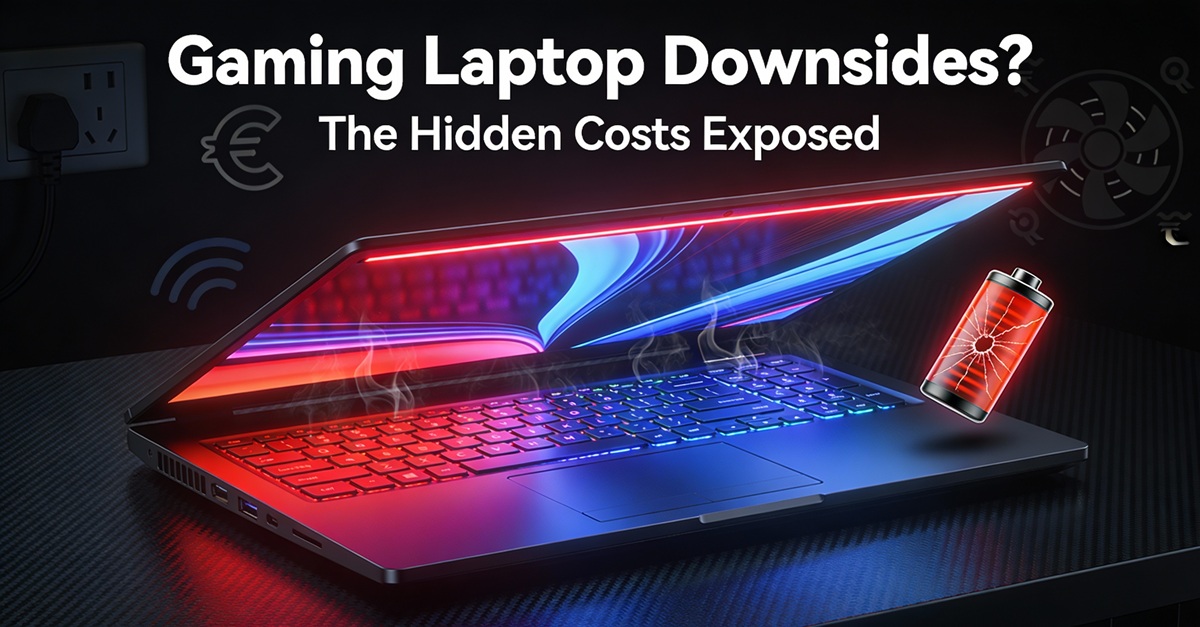
Gaming laptops deliver impressive performance in a portable form, but that power comes with trade-offs. The downsides of using a gaming laptop include high cost, poor battery life, heavy weight, overheating issues, loud fans, and limited upgradability. For students, professionals, and casual gamers comparing gaming laptops vs regular laptops, the decision often comes down to how much performance they truly need versus portability, comfort, and long-term value.
Introduction: Why This Question Matters More Than Ever
Gaming laptops have become increasingly popular—not just among gamers, but also among students, vloggers, video editors, and remote professionals. On paper, they seem like an all-in-one solution: powerful CPUs, dedicated GPUs, fast refresh-rate screens, and sleek designs.
However, many buyers later realize that performance alone doesn’t define a good daily-use laptop. If you’re researching gaming laptop disadvantages or wondering is a gaming laptop worth it for your lifestyle, this guide breaks down the real drawbacks you should consider before investing.
1. High Cost Compared to What You Actually Get
One of the biggest downsides of using a gaming laptop is the price. Gaming laptops are significantly more expensive than regular laptops or even desktops with similar specifications. The premium comes from fitting high-performance hardware—powerful CPUs, dedicated GPUs, advanced cooling systems—into a compact chassis.
For many buyers, this means paying more while still facing compromises like thermal throttling or limited battery life. If your primary use is office work, studying, content consumption, or light editing, a gaming laptop may offer far more power than you realistically need, without delivering proportional value.
2. Poor Battery Life Limits True Portability
Despite being “laptops,” gaming machines are not designed for long unplugged use. Gaming laptop battery life issues are extremely common. On average, most gaming laptops last only 3–5 hours on battery during light usage, and significantly less during gaming or video editing.
This happens because high-end GPUs and CPUs consume a lot of power even when optimized. For students attending long classes, professionals working remotely, or creators editing on the go, constantly searching for a power outlet can quickly become frustrating.
3. Heavy and Bulky Design Affects Daily Comfort
If you’ve ever asked are gaming laptops heavy, the short answer is yes. Most gaming laptops weigh 2.5 kg or more, not including the large power adapter that’s often required.
This bulk reduces portability and comfort, especially for people who commute daily, travel frequently, or work from cafes or shared spaces. Compared to thin-and-light ultrabooks or regular laptops, gaming laptops feel noticeably less convenient for everyday use.
4. Overheating and Loud Fans Are Common Problems
Another major concern among users is gaming laptop overheating problems. Packing powerful components into a tight space makes heat management challenging. During gaming, video rendering, or heavy multitasking, internal temperatures rise quickly.
To compensate, cooling fans run aggressively, leading to loud noise that can be distracting in quiet environments. In some cases, excessive heat causes thermal throttling, where the system automatically reduces performance to prevent damage—ironically limiting the power you paid extra for.
5. Performance Drops When Unplugged
A less obvious but important drawback is how gaming laptops behave when not connected to power. To preserve battery health and prevent overheating, most gaming laptops reduce CPU and GPU performance when running on battery.
This means tasks like gaming, video editing, or rendering may feel noticeably slower unless you’re plugged in. For creators or professionals expecting consistent performance everywhere, this limitation can be a dealbreaker.
6. Limited Upgradability and Future-Proofing
Unlike desktops, gaming laptops offer very limited upgrade options. Many modern models come with soldered RAM, GPUs, or other components, making future upgrades difficult or impossible.
This lack of flexibility impacts long-term value. As software requirements increase over time, you may find yourself replacing the entire laptop rather than upgrading a single component—another hidden cost among the common problems with gaming laptops.
7. After-Sales Support and Maintenance Challenges
High-performance laptops generate more heat and stress internal components, which can lead to faster wear and tear. Battery degradation, thermal issues, and fan failures are not uncommon over time.
After-sales support quality varies by brand and region. In hotter climates, overheating and battery issues may appear sooner, making reliable service support an important factor. Delays in repairs or limited on-site service can disrupt work, studies, or content creation schedules.
8. Gaming Laptops vs Regular Laptops: What Are You Trading Off?
When comparing gaming laptops vs regular laptops, the trade-offs become clear. Gaming laptops prioritize raw performance, while regular laptops focus on portability, battery efficiency, and everyday comfort.
If your daily tasks include browsing, writing, coding, online meetings, or light creative work, a regular laptop often provides a smoother, quieter, and longer-lasting experience. Gaming laptops only make sense if you genuinely need the GPU power on a regular basis.
9. Are Gaming Laptops Good for Everyday Use?
Many buyers ask whether gaming laptops for everyday use are practical. The answer depends on expectations. While they can handle everyday tasks easily, their weight, fan noise, heat, and battery limitations often make them less pleasant than standard laptops for routine work.
For occasional gaming or creative work, a gaming laptop can be convenient. But as a daily companion for long hours, lighter and more efficient machines usually offer better comfort and balance.
Gaming Laptop Pros and Cons: A Balanced Perspective
Looking at gaming laptop pros and cons, it’s clear they excel in performance but struggle in practicality. They are powerful, versatile machines capable of handling demanding tasks, but the downsides—cost, heat, noise, weight, and battery life—are real and unavoidable for many users.
Looking for the Best Gaming Laptop in 2026?
Explore our in-depth Gaming Laptop Buying Guide 2026 with the best options sorted by budget and performance.
Read Complete Gaming Laptop Buying Guide (2026)Final Verdict: Is a Gaming Laptop Worth It?
So, is a gaming laptop worth it? If you need strong GPU performance for gaming, 3D work, or heavy video editing and are comfortable staying plugged in most of the time, a gaming laptop can make sense.
However, if portability, long battery life, quiet operation, and value for money matter more, the downsides of using a gaming laptop may outweigh the benefits. Understanding your actual usage patterns is the key to making the right decision.
Conclusion
Gaming laptops are powerful but imperfect tools. Their disadvantages—high cost, short battery life, bulk, overheating, and limited upgradability—are not minor issues but fundamental design trade-offs. For students, professionals, and first-time buyers, evaluating these drawbacks honestly can prevent costly regret.
Before choosing a gaming laptop, ask yourself one simple question: Do I truly need this level of power every day? The answer will guide you toward the right machine for your lifestyle.
FAQs
Still confused between a gaming laptop and a regular laptop? Take time to map your real usage needs before buying—performance is important, but comfort and longevity matter just as much.